

Los pronombres relativos en inglés son palabras que unen dos oraciones y evitan repetir un sustantivo. Son fundamentales para formar frases más naturales y fluidas, especialmente al escribir o hablar con claridad.
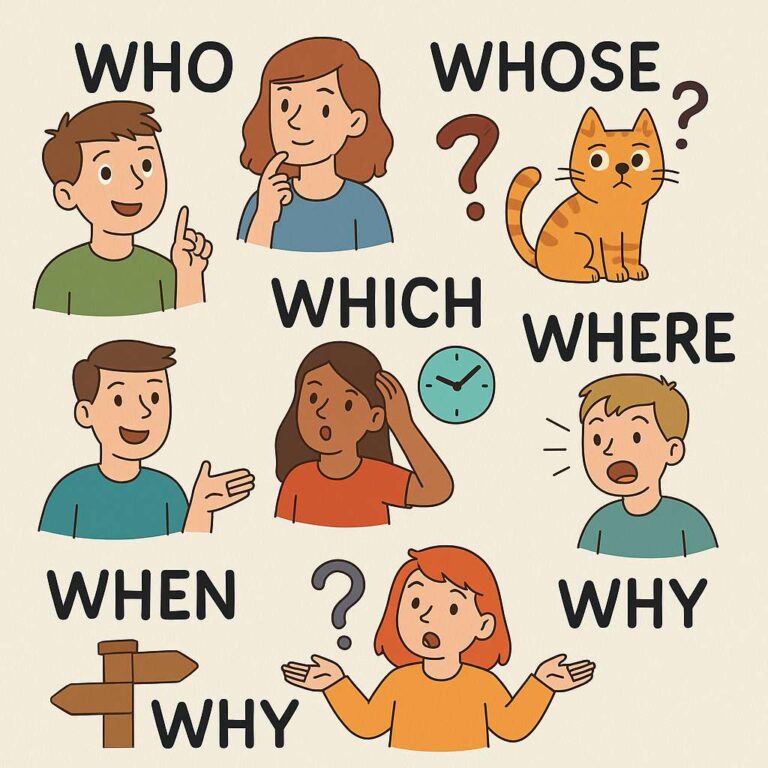
Lista de pronombres relativos en inglés
| Pronombre | Traducción | Uso principal |
|---|---|---|
| Who | quien, que | Personas |
| Whom | a quien | Personas (más formal) |
| Whose | cuyo/a | Posesión |
| Which | que, el cual | Animales y cosas |
| That | que | Personas, animales o cosas (uso general) |
| Where | donde | Lugares |
| When | cuando | Tiempos |
| Why | por qué | Razones |
Ejemplos de los pronombres relativos en inglés
Who – personas
- The woman who lives next door is a doctor.
La mujer que vive al lado es médica.
Whom – personas (más formal, normalmente tras preposición)
- The man to whom you spoke is my teacher.
- El hombre con quien hablaste es mi profesor.
Whose – posesión
- The girl whose phone rang in class was embarrassed.
- La chica cuyo móvil sonó en clase se puso incómoda.
Which – animales y cosas
- The car which is parked outside is mine.
- El coche que está aparcado fuera es mío.
That – personas, animales o cosas (uso general)
- The book that you gave me is very interesting.
- El libro que me diste es muy interesante.
Where – lugares
- This is the place where we met for the first time.
- Este es el lugar donde nos conocimos por primera vez.
When – tiempos
- There are days when I don’t want to study.
- Hay días cuando no quiero estudiar.
Why – razones
- I don’t know the reason why he left so early.
- No sé la razón por la que se fue tan pronto.
Errores comunes con los pronombres relativos
- Usar “that” en lugar de “whose”:
Incorrecto: The man that car is new.
Correcto: The man whose car is new. - Omitir el pronombre cuando es necesario:
Incorrecto: The woman lives next door is a doctor.
Correcto: The woman who lives next door is a doctor.
- Usar “which” para personas:
Incorrecto: The boy which won the prize.
Correcto: The boy who won the prize.

Ejercicios con pronombres relativos
1. Completa con who / which / where
Rellena cada hueco con el pronombre relativo correcto: who, which o where.
The teacher ___ explained the lesson is very patient.
This is the restaurant ___ we had dinner yesterday.
The book ___ I bought is about World War II.
She’s the girl ___ won the English contest.
That’s the shop ___ I usually buy my clothes.
Respuestas ejercicio 1
who
where
which
who
where
2. Completa con whose / when / why
Usa: whose, when o why según corresponda.
I don’t understand the reason ___ he is angry.
1998 was the year ___ my sister was born.
The man ___ car was stolen went to the police station.
That’s the day ___ we first met.
She is the student ___ project won the first prize.
Respuestas ejercicio 2
why
when
whose
when
whose
3. Completa con who / whom / which / that
Rellena cada frase con who, whom, which o that.
The woman ___ called you is my boss.
The film ___ we watched last night was very interesting.
The man to ___ you spoke is our new neighbour.
This is the laptop ___ I bought last week.
The children ___ live next door are very friendly.
Respuestas ejercicio 3
who
which / that
whom
that / which
who
Preguntas frecuentes
¿Cuál es la diferencia entre “which” y “that”?
“Which” se usa en oraciones no esenciales (con comas), mientras que “that” se usa en oraciones esenciales.
¿Puedo omitir el pronombre relativo?
Solo cuando el pronombre no es el sujeto de la cláusula: “The book (that) I read was good.”